Digital Mapping

I am pleased to advise that we have a digital mapping solution for our detailed mapping of the Dublin & Wicklow Mountains. This is being provided in conjunction with Satmap who manufacture the Satmap Active10 GPS unit.

We did investigate other solutions: Garmin, MapYX and ViewRanger. We decided on working in conjunction with Satmap on the basis of (1) their hardware works well and especially in poor weather (2) they were prepared to make a more equitable share of revenue, reflecting the time & effort we put into capturing the detail and (3) we have found Satmap staff to be helpful and responsive. We trust that, if you invest in their solution, that you will find the same.

The Dublin & Wicklow Mountain map card product consists of an SD card that runs on the Satmap Active10 GPS unit. The mapping contains three layers a) a general base map layer b) a simplified version of our mapping at a nominal scale of 1:50,000 and c) a detailed version of our mapping at a nominal scale of 1:25,000. There is also an inbuilt copy of the SRTM digital terrain data to assist in route planning. The three maps can merge seamlessly from one to another as the user zooms in or out. The purpose of the 1:50,000 data is to enable a wider view of an area to assist with route planning. The 1:50,000 and 1:25,000 maps both use a 10 metre contour interval. Coverage is similar to the published printed maps with the addition of an area from Enniskerry to the Irish Sea. This extra area covers the Dublin Mountains Way in it's entirety as well as several parks, Killiney Hill etc. We have been updating detail over time, so the detail represents our current knowledge of the entire area.

There are many features on the Satmap Active10 GPS unit. However the two principal features from the ordinary walkers point of view are 1) Navigation and 2) Route Planning.
1) Navigation. A good GPS unit with a good map revolutionises hill navigation. There is still a requirement to understand how to read a map - to pick a route from the map and to relate the map features to the landscape around. However the GPS chip in conjunction with the detailed map gives you an instant update on your position as you move across the map and landscape. You can see quickly if you are following the route you intend and judge how far away adjacent features are. If in mist, you encounter say, a large boggy or rocky area, it is simplicity to walk around by most suitable route and check your position on the far side to get back on course. You can of course use the inbuilt electronic compass, but I don't see the point - it works best to simply read the map and use the GPS to update your location on you move across the terrain.
2) Route Planning. This function is intended more for 'home' use, prior to heading out. It enables one to draw a route on the map, by setting a series of waypoints. When finished, the Active10 GPS unit will then generate useful data such as a) length & height to be climbed b) route profile of ascents & descents and c) a route card if desired. This function will be useful for those finding their feet in terms of assessing walks and time etc. You should note that the elevation information is derived from the inbuilt digital terrain data which will likely yield some small variance with the map and the actual ascent/ descent on the hill. However the differences will be relatively small and not likely to make any significant impact on your day. Discrepancies are most likely to be observed on level walks, due to 'noise' in the digital terrain data.

The Satmap Dublin & Wicklow Mountains SD card will retail at €50 inc VAT at 23%. It will only be available from EastWest Mapping in Ireland and Satmap in the U.K. This will run on any Satmap Active10 GPS unit.
For those who wish to purchase a Satmap Active10 GPS unit, we will have a bundle of GPS + Dublin & Wicklow Mountains SD card at c.€360 + VAT at 23%. We also sell the Satmap SD Card for OSI 1:50,000 mapping for the Republic of Ireland. Northern Ireland can be purchased elsewhere separately for this unit.

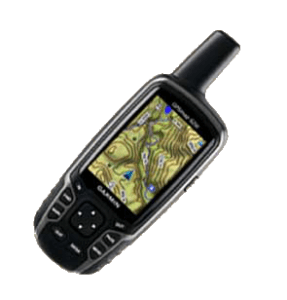
The Satmap device itself is similar to several other Handheld Mapping units on the market. It is a little wider and a touch heavier than similar Garmin units but this is compensated for by the large screen. Since the purpose of the unit is to display mapping, this is a reasonable trade off. Battery power needs thought - the unit takes 3xAA batteries or a rechargeable battery pack which is an optional extra. Using AA batteries, I'd recommend rechargeable AA Ni-Mh type batteries, sold for cameras and high end devices. These last several years and you will need 6 batteries - 3 in the unit and 3 spare in your rucksack. For a full days walking, ensure the batteries are fully charged before you set out and set one of the power saving options on the unit. These turn off the screen display after a set time and conserve power when you don't need to consult - the unit continues to track your location and pressing any button restores the screen display. This unit uses buttons rather than touch screen technology - there is a logic in this for outdoor use, particularly in poor conditions. Gloved hands can operate the buttons and there is no opportunity for the screen to be set off accidentally as say when you stuff the unit back inside your jacket. Finally you do need to allow the unit a minute or so in a stable position to acquire an initial fix - just turn it on before you put on your boots and it'll be ready when you set off.